
The 9 Checks to Run Before You Pay for Any Used Car in Kenya
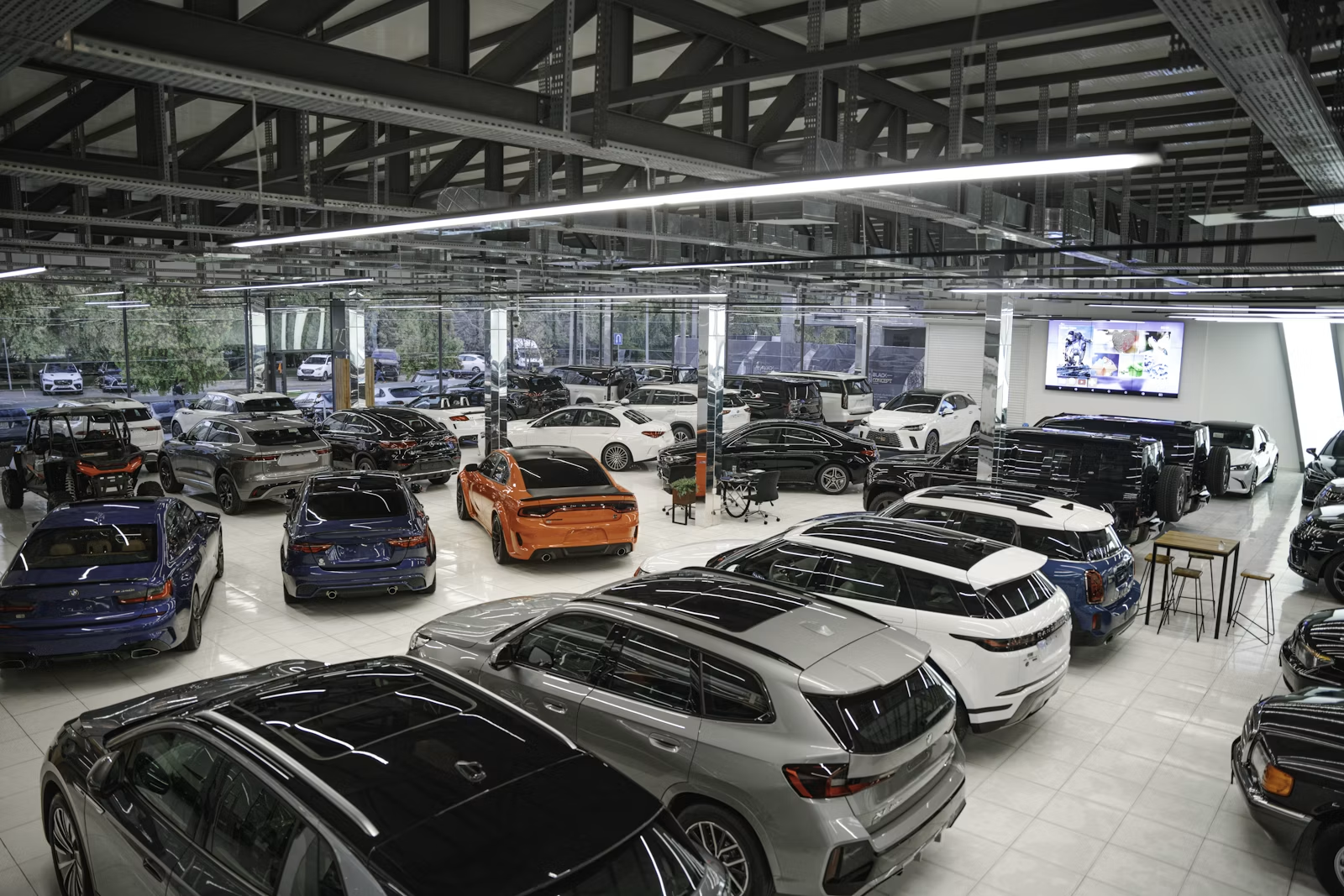
The 9 Checks to Run Before You Pay for Any Used Car in Kenya
Most people inspecting a used car in Kenya check three things: the paint, the mileage, and whether it starts. All three are trivially easy to manipulate, and none of them tell you what the car will cost you over the next two years.
This is the list we'd want a buyer to run — including on our own stock. A seller who resists any of these is telling you something.
1. Verify ownership before you inspect anything
Do this first, because if it fails, nothing else matters.
Run the registration number through NTSA's records. Confirm the registered owner's name matches the ID of the person selling to you. Check for outstanding fines — unpaid fines block the ownership transfer entirely, and that becomes your problem the moment you pay.
If the seller isn't the registered owner, you need a documented explanation and the owner's direct participation. "I'm selling for my brother who is in Mombasa" is where a large share of vehicle fraud begins.
2. Match the numbers to the metal
Chassis number and engine number, physically located on the vehicle, compared against the ownership record. Character by character.
Look at the stamping itself. Re-stamped or ground-and-restamped numbers have a texture and irregularity that's visible once you know to look. If anything about the chassis plate looks disturbed, end the inspection.
3. Read the panel gaps and paint depth
Stand at each corner of the car and sight down the body line. Panel gaps should be even and consistent side to side. A gap that's tight at the top and wide at the bottom means a panel has been replaced or pulled.
Check the paint on adjacent panels in direct sunlight — an accident repair rarely matches perfectly across a joint. Open the doors and inspect the paint inside the door shuts and under the boot seal, where resprays are usually less careful.
Then look at the bolts on the wings and bonnet. Factory bolts have untouched paint on the heads. Spanner marks mean the panel came off at some point.
4. Check underneath, properly
Kenyan roads punish suspension and underbody. Get the car on a lift, or at minimum get underneath it with a torch.
You're looking for: fresh underseal hiding rust or damage, bent or welded subframe components, oil weeping from the sump or gearbox, and corrosion around the sills and jacking points. On imported units, check for sea-transit corrosion.
Bounce each corner firmly. The car should settle in one movement. Repeated bouncing means shot dampers — not fatal, but it's a negotiating point worth tens of thousands.
5. Cold-start it yourself
Insist on starting the engine from cold. A seller who has warmed the car up before you arrive has removed your single most informative test.
Listen in the first ten seconds: knocking, rattling from the timing area, a diesel that cranks excessively. Watch the exhaust — blue smoke is oil, white smoke that persists is coolant, and either is a serious conversation.
Then look at the oil filler cap and dipstick. Mayonnaise-coloured residue under the cap suggests coolant mixing with oil. Walk away.
Show Image
6. Drive it in the conditions you'll actually use
A ten-minute loop on smooth tarmac tells you almost nothing about a car you'll drive in Nairobi traffic.
Get it up to highway speed and take your hands briefly off the wheel on a flat stretch — persistent pull means alignment or accident damage. Brake firmly from speed and feel for pulsing through the pedal or the car pulling to one side.
Then sit in stop-start traffic for fifteen minutes and watch the temperature gauge. Cooling problems reveal themselves in a jam, not on the open road. On an automatic, feel every gear change; hesitation or a jolt between gears is expensive.
Turn the air conditioning on early and leave it on. Note whether it stays cold.
7. Test every electrical item
Windows, central locking, mirrors, wipers, all lights, indicators, the horn, the radio, the reversing camera, every dashboard warning lamp. Confirm the warning lights illuminate at ignition and then go out — a bulb removed from the cluster is a cheap way to hide a permanent fault.
On Japanese imports, check whether the infotainment system is in Japanese and whether it can be converted. It's not a dealbreaker, but it's a cost.
8. Treat the odometer as an unverified claim
Digital odometers are straightforward to alter. Read the wear instead.
A car claiming 60,000km should not have a shiny steering wheel, a worn driver's seat bolster, worn pedal rubbers or a polished gear knob. Check the service records and any dated stickers under the bonnet or on the door frame. Inconsistency between claimed mileage and physical wear is one of the most reliable signals available to you.
9. Pay for an independent inspection
For anything above roughly KES 800,000, commission your own inspection from a mechanic you chose — not one recommended by the seller, and not the garage next door to the yard.
It costs a few thousand shillings. It routinely finds five figures of deferred maintenance, which is either a negotiating position or a reason to walk. There is no version of this where it isn't worth the money.
The three findings that end the conversation
Some faults are negotiable. These aren't:
Structural or chassis damage. A car that has been straightened after a serious impact never handles or protects the way it should. No discount compensates.
Ownership that doesn't check out. If the paperwork and the person don't align, you are looking at a vehicle you may not be able to legally own.
Evidence of flood damage. Silt under the carpets or in the spare wheel well, a musty smell that returns, corrosion on electrical connectors under the dash. Flood cars produce electrical faults for years and there's no fixing it.
Every vehicle CarXpress sells goes through this list before it's listed — and we hand you the inspection report rather than waiting for you to ask for it. See what's in stock →